
Putting residents and communities first.
Raising rental standards. Expanding choice in housing.
We are NRHC.
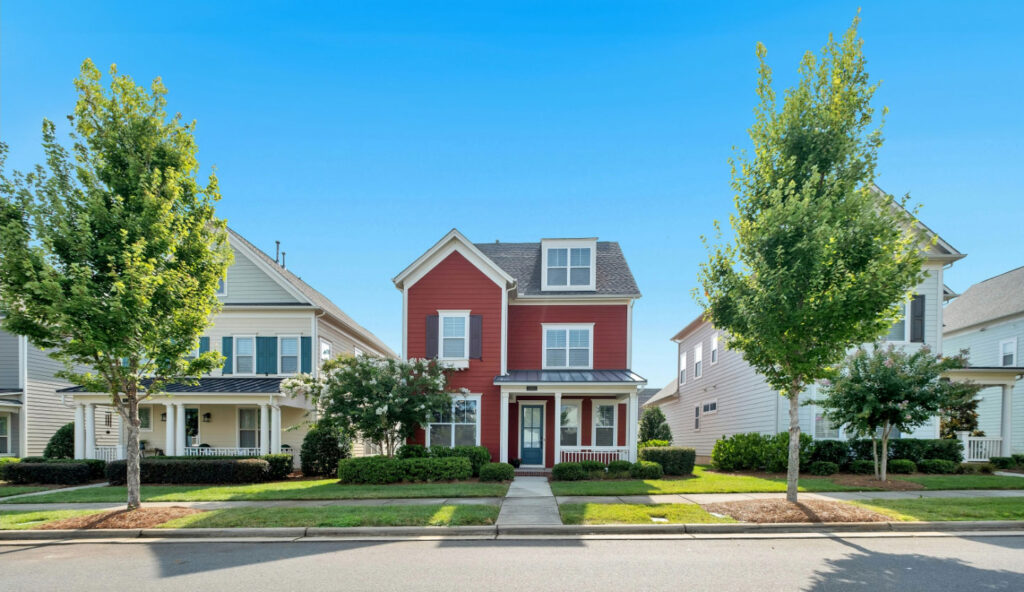
Families are choosing to rent single-family homes.
Professionally managed single‑family rentals give families the flexibility they need with great living experiences and timely maintenance. We serve military families, first responders, single parents, frontline workers, and other hard-working Americans.
Our goal is to provide high‑quality, move‑in‑ready homes with excellent service and top amenities at prices families can afford. Growing families who rent want a yard, a garage, and access to good schools.
Single Family Rentals Provide Quality Housing
- For decades, families who wanted to rent a single‑family home typically relied only on individual landlords. Small‑scale owners and individual investors still operate more than 90% of the nation’s single-family home rentals.
- In 2024, professional housing providers invested $2 billion in renovations, upgrades, and other property‑level improvements, ensuring homes remain safe, modern, and well‑maintained.
- These providers also deliver reliable, responsive customer service that individual owners and small investors often cannot match. Professional management ensures residents always know who to contact when something needs attention — and that repairs are handled quickly and consistently.
- Today, professional housing providers offer residents high‑quality, move‑in‑ready homes at an affordable price — along with the opportunity to save and prepare for future homeownership.
In today’s economy, renting is more affordable than buying a home.
- In areas where single-family rentals are popular, homeownership costs exceed rental costs by ~40%, or nearly $10,000 per year.
- Renting opens the door to better neighborhoods and schools that fit families’ needs as they plan for the future.
- Professionalized housing providers give American families a much-needed option – and offer a pathway to homeownership.
- Families can put the extra dollars saved from renting toward homeownership in the future.
- On time rent payments help build credit toward qualifying for a home purchase loan.
- Some of our housing providers provide financial literacy programs and a First Look option for existing residents on homes being offered for sale.
Today’s housing crisis is due to an acute housing shortage.
- High home prices are driven by an acute housing shortage due to local regulations, zoning laws, high mortgage rates, and construction costs.
- The real solution: build more homes and expand responsible credit access.
- Institutional investors are doing exactly that: in just the last year they’ve brought on ~40,000 build-to-rent units, with another 100,000 in the pipeline, dramatically improving housing affordability in areas where they’re added.
- Families, policymakers, and housing providers all share the same goal: more homes people can afford.
What the Media and Experts are Saying
New York Times
“Landlords are not the cause of the nation’s housing crisis, and any plan that reduces investment in housing is only going to make matters worse.”
Washington Post
“Large investors, those with over 100 properties, own 1 percent of U.S. homes. Yet, detractors on the left and right have made them into villains who are scooping up houses from hard-working families.
The problem with housing is that there isn’t enough of it. Government shouldn’t care who buys it. It should be looking for ways to make it easier to build more of it, which will mean getting out of the way. Scapegoating investment bankers is always politically popular, especially in an election year, but it won’t do anything to make housing more affordable.”
CNBC
“Housing analysts, however, say the influence of institutional investors has been overstated, and that a longstanding shortage of homes is the primary reason why houses have become increasingly unaffordable.
‘The real problem is that we’ve added far more homeowners than we’ve built single-family homes,’ Jay Parsons, an analyst who tracks rental housing and development trends, tells CNBC Make It. ‘It’s all about supply and demand.’”
Wall Street Journal
“The top two dozen single-family rental firms own about 520,000 homes in the U.S. combined. That’s less than 1% of the single-family housing stock
Institutional investors simply aren’t to blame for the more than 50% increase in housing prices since early 2020. The biggest culprit is inflation followed by the higher interest rates to contain it. Owners who locked in low mortgage rates are now reluctant to move, which means fewer homes for sale. The longstanding problems for housing supply are zoning regulations and permitting red tape that limit new construction.”
Newsweek
“Housing experts tend to agree with industry insiders in saying institutional investors are not the cause of the current affordability crisis in the nation, which has its roots in a chronic lack of inventory which can be traced back to underbuilding when compared with demand in the years following the subprime mortgage crisis.
‘Large corporate ownership is a red herring in the broader supply debate: most single-family rentals are owned by small landlords, and many of the markets where institutional investors have been most active are also places where inventory has already been rising and price growth has cooled over the past two years,’ [Economist Jake Krimmel] said.”
Bloomberg News
“At the same time, even as they account for a small share of homeowners, institutional homeowners have been useful in providing liquidity and market stability over the past 15 years. During the foreclosure crisis in the early 2010s, home prices were falling, unemployment was high, bank balance sheets were stressed, and demand for rentals outpaced demand for purchases. Institutional homebuyers played a crucial role by buying up homes and renting them out. More recently, when homebuying demand plunged in late 2022 after the Federal Reserve raised interest rates, homebuilders were able to offload new homes they were struggling to sell to individuals to institutional investors.
This ability to smooth out demand — selling homes primarily to households, a modest amount to build-to-rent operators, and then to institutional investors when market conditions turn challenging — is mutually beneficial. It helps de-risk an industry that’s inherently risky and cyclical, provides steady employment for construction workers and other tradespeople, and reduces the risk of homebuilder bankruptcies.”
Viral claims about institutional homeownership are not only overblown – they’re factually wrong.
- The U.S. homeownership rate has remained steady since the late-1960s. Families are continuing to purchase homes of their own.
- Institutional investors own less than 0.5% of all U.S. single-family homes and just 2-4% of all single-family rentals.
- Institutional purchases of single-family homes in the US are down over 90% since 2022, and represented just 0.3% of total 2024 home sales.
As the leading voice for professionally-managed rental housing providers seeking to meet the needs of residents and their communities, the National Rental Home Council (NRHC) is dedicated to raising the standards for rental housing.
NRHC works to advance the goal of improving access to single-family homes, particularly in places where the high cost of homeownership locks residents out of neighborhoods with essential resources needed to thrive. The NRHC believes that, by broadening housing options and supply, professionally-managed rental home providers can contribute to housing security and residents’ well-being.

The Latest from NRHC

Join Us
Become a member.

Newsroom
The latest news and updates from NRHC
Research and Fact Sheets
Professionally-managed rental housing providers are in the business of providing Americans with access to quality housing in vibrant, well-located neighborhoods.